The Disconnect Nobody Is Talking About
India is home to more than 200 healthcare AI companies. From radiology AI to maternal health monitoring, from AI-powered skin screening to mental health chatbots — the innovation pipeline has never been stronger. Startups like Qure.ai, Niramai, Janitri, Tricog, and Intelehealth have raised hundreds of crores. Google Health is investing in MedGemma and IndusDerma. Wadhwani AI is building HealthVaani with support from Google.org. AIIMS and IISc are collaborating on India-specific health AI models.
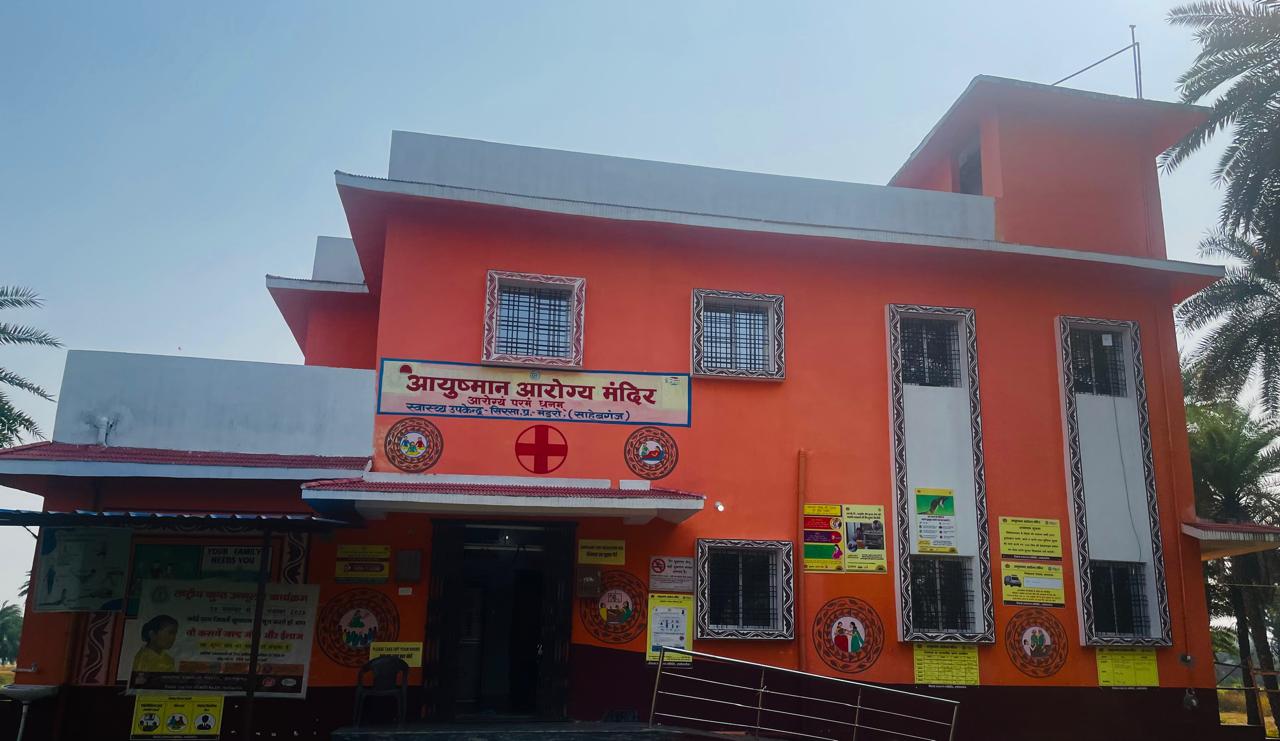
At the same time, India operates the largest primary healthcare network in the world — 1,60,000 Ayushman Arogya Mandir (AAM) centres, each headed by a Community Health Officer (CHO), serving approximately 5,000 people per centre. These centres are the first — and often the only — point of healthcare contact for over 80 crore Indians.
Here is the disconnect: between these 200+ AI companies and 1,60,000 health centres, there exists almost no infrastructure connecting the two.
The AI models exist. The health centres exist. The patients exist. What doesn't exist is a system that takes AI from a lab or a demo screen and puts it into the hands of the doctor who sees 500 patients a month in a town that barely shows up on Google Maps.
This is the gap we set out to fill.
What We Observed on the Ground
Our team has spent the last year working directly with Community Health Officers and frontline health workers across Chhattisgarh, Jharkhand, and Bihar. Not from a research desk — inside sub-health centres, district hospitals, zila panchayat halls, and block medical offices.
Here is what we observed:
1. Health workers are drowning in paperwork, not patient care.
A typical CHO spends approximately 40% of their working day on administrative tasks — HMIS monthly reports, NQAS compliance documentation, official correspondence, ASHA coordination, community health register maintenance, and programme reporting. This is time directly taken away from patient examination, screening, and clinical care. AI can generate an HMIS report in 30 seconds that currently takes a CHO 2-3 hours. That is not a theoretical improvement. We have seen it happen in real-time during our pilot deployments.
2. AI tools are built for hospital doctors, not frontline health workers.
Most healthcare AI tools are designed for English-speaking physicians working in hospitals with stable internet, electronic medical records, and imaging equipment. India's primary health centres have none of this. CHOs speak Hindi, Chhattisgarhi, Santhali, Magahi, and dozens of other languages. Internet connectivity is intermittent. There are no PACS, no EMR systems, no diagnostic imaging machines. An AI tool designed for a hospital radiologist is useless to a CHO in rural Kabirdham. The tools need to be redesigned — or more accurately, deployed differently — for this environment.
3. Nobody trains health workers on AI.
There are thousands of conferences about AI in healthcare. There are hundreds of pilot programmes in hospitals. But almost nobody physically travels to a district headquarters to train frontline health workers on AI — in person, in their language, within their daily workflow. Without hands-on training and sustained engagement, even the best AI app gets downloaded and forgotten within a week.
4. Government access is the invisible barrier.
Deploying anything at a government Ayushman Arogya Mandir centre requires institutional sanction — from the Chief Medical and Health Officer (CMHO), through Block Medical Officers (BMOs), down to individual facility heads. AI companies, particularly startups, do not have these relationships. They build world-class products but have no pathway to put them inside the government health system.
5. The trust deficit is real.
A doctor will not use an AI tool on a real patient unless they trust it. Trust is not built through investor decks or conference presentations. Trust is built when a health worker uses an AI tool on a patient, sees the result, compares it with their own clinical judgement, and says — "yes, this is correct." That moment of validation is what converts scepticism into adoption. Creating that moment at scale requires physical presence, structured training, and sustained engagement.
What Is Changing: Building AI Infrastructure from the Ground Up
We founded the AI for CHOs initiative — and subsequently, AI LaunchPad — to build the missing infrastructure between healthcare AI innovation and primary healthcare delivery.
AI LaunchPad is a ground-level deployment, validation, and adoption platform for healthcare AI. It works as follows:
AI companies bring their model — whether it is for screening, diagnosis, monitoring, or clinical decision support. We analyse the model, design field use cases, translate training materials into local languages, secure government approvals, train frontline health workers in person, deploy the tool at Ayushman Arogya Mandir centres, monitor adoption for 30-60 days, collect validated patient interaction data, and deliver a comprehensive evidence report back to the AI company.
The AI company gets what no other channel can provide: real doctors using their tool on real patients in real conditions — not in a controlled hospital environment, but in the primary healthcare setting where 80% of India accesses care.
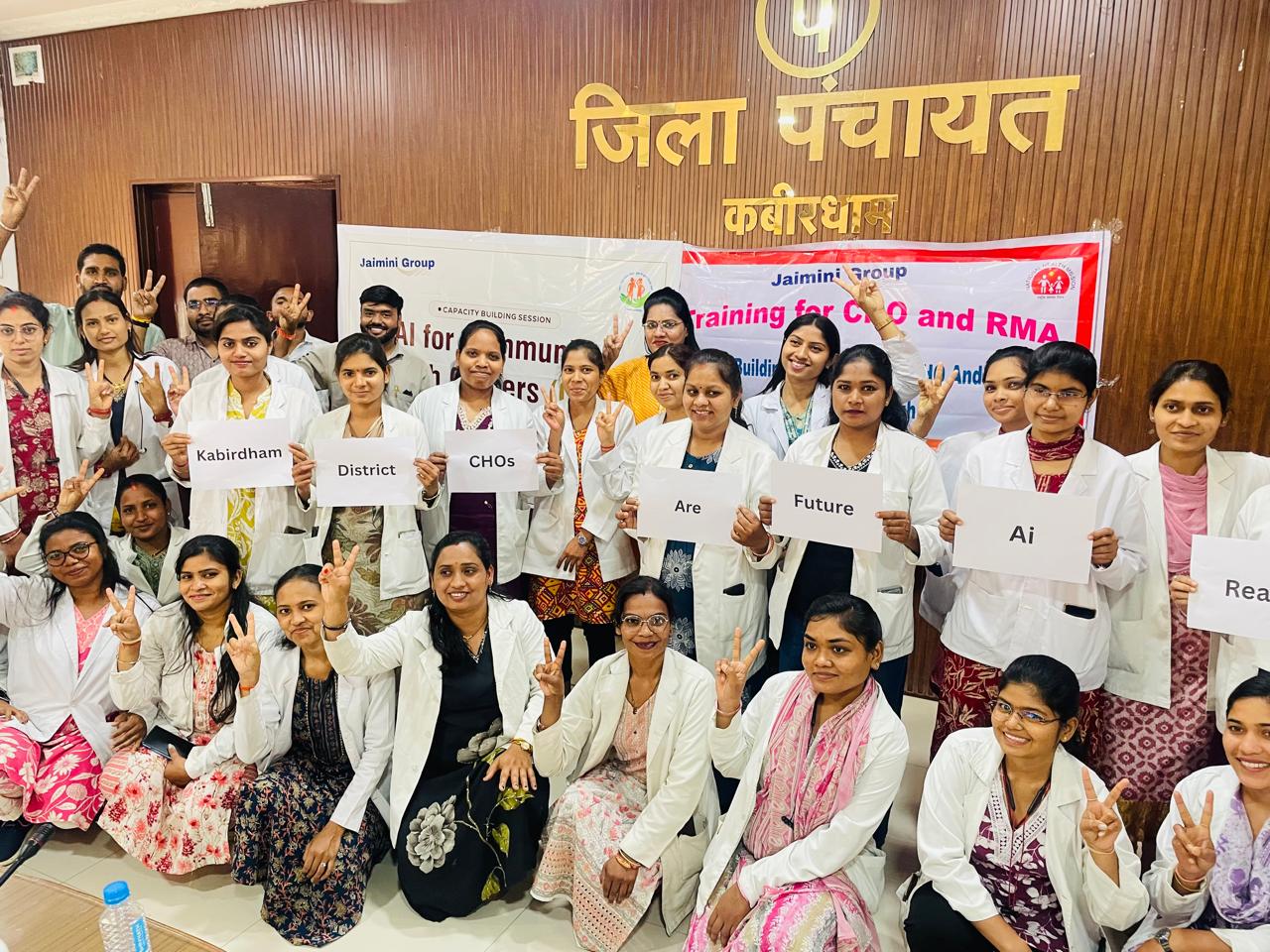
Our first deployment was in Kabirdham district, Chhattisgarh. Over 100 CHOs and health workers were trained on AI tools in a single session. The adoption rate was 94%. The programme was sanctioned by the district CMHO. It was subsequently recognised by the Hon'ble Deputy Chief Minister of Chhattisgarh. The entire deployment was conducted at zero cost to the government, using the health workers' existing smartphones.
Why This Matters for Healthcare AI Companies
If you are building a healthcare AI product in India, here is the reality: your model is only as good as the evidence behind it. Investors, regulators, and hospital procurement committees increasingly ask the same question — "where has this been validated in the real world?"
AI LaunchPad provides that validation. Through a single deployment, an AI company receives:
- Real users — trained health workers who use the tool daily on actual patients, not in a demo or a pilot ward, but in their regular clinical practice.
- Real data — thousands of verified patient interactions per district. Demographic diversity that no single hospital can provide. Rural, semi-urban, tribal, and aspirational district populations.
- Real feedback — structured field intelligence on what works, what breaks, what confuses users, and what features are missing. This is product feedback that no user survey can replicate.
- Real evidence — documented adoption rates, AI accuracy in field conditions, patient outcomes, government endorsement letters, and publication-ready case studies.
- Real scale — from one district to an entire state. Our network currently covers five states: Chhattisgarh (pilot proven), Jharkhand, Bihar, Odisha, and Rajasthan.
For AI companies competing in a crowded market, this is a differentiation that cannot be replicated easily. Saying "our AI was validated across 5,000 patients at government primary health centres" carries fundamentally more weight than "our AI was piloted at one hospital in Bangalore."
Why This Matters for Government
For state health departments and the National Health Mission, the value proposition is straightforward:
AI can improve HMIS reporting timeliness — which directly affects state health rankings. AI can improve NQAS compliance scores across facilities. AI can enable faster NCD screening — contributing to Ayushman Bharat targets. AI can free up 40% of CHO time currently spent on documentation — converting that time into patient care.
All of this at zero cost to the government. No hardware purchase. No software procurement. No recurring expenditure. AI runs on the CHO's existing smartphone.
The alignment with national priorities is direct: Ayushman Bharat Digital Mission (ABDM), National Quality Assurance Standards (NQAS), Comprehensive Primary Health Care (CPHC), and Digital India — all envision technology-enabled healthcare at the primary level. AI infrastructure at AAM centres accelerates every one of these programmes.
Why This Matters for Patients
Ultimately, every piece of this infrastructure exists for one reason: the patient.
When a CHO spends 40% less time writing reports, that time goes to the next patient in the queue. When AI assists in NCD screening, a case of diabetes or hypertension is caught three months earlier than it would have been. When AI generates patient education materials in the local language, a pregnant woman understands her ANC requirements better. When AI helps prepare referral letters, a patient reaches the district hospital with proper documentation instead of a handwritten note.
The patient does not see the AI. They see a health worker who is faster, more prepared, more accurate, and able to give them the attention they need. That is the impact.
The Ecosystem We Are Building
Our vision is not to deploy one AI tool at one district and declare success. We are building a permanent AI ecosystem at India's primary healthcare level — an infrastructure that any future innovation can plug into.
Consider how India built its digital payments ecosystem. UPI did not create payments — banks had already built the technology. UPI created the infrastructure that connected every bank, every fintech, every merchant, and every customer. Once the rails existed, innovation exploded. PhonePe, Google Pay, Paytm, CRED — every player plugged in.
Healthcare AI needs the same infrastructure. Today, every AI company that wants to reach primary care has to independently navigate government approvals, build field teams, design training programmes, and figure out CHO adoption from scratch. This is inefficient, expensive, and rarely successful.
AI LaunchPad builds the rails. Once a district is AI-ready — with trained health workers, government sanction, deployment protocols, and monitoring systems in place — any AI tool can be deployed through the same infrastructure. Dermatology screening today. Cardiac risk scoring tomorrow. Maternal health monitoring next quarter. The infrastructure compounds.
“For AI companies, this means faster deployment. For government, this means structured adoption instead of ad-hoc pilots. For patients, this means the benefit of innovation reaches them — not five years from now, but within this year.”
— Jaimini Group Editorial Team